Skip to Content
EduManara
  • Home
  • Courses
  • Contact us
  • Sign in
  • Contact Us
EduManara
      • Home
      • Courses
      • Contact us
    • Sign in
    • Contact Us
    1. Courses
    2. Math
    3. Extra
    Nav
    Home └Math └Extra
    Math

    Math

    Discover how math shapes the world around you! From using trigonometry to measure heights in construction, to understanding quadratics in physics, this course connects algebra and geometry to real-life problem-solving. Dive into hands-on activities and see how these concepts impact everyday life!
    Start this Course
    Responsible Andy Hakim
    Last Update 05/07/2025
    Completion Time 2 days 3 hours 16 minutes
    Members 1
    • ​ Course
    Filter & order
    • Video 4
    • Order by : Newest
      Sort by
      Newest Most Voted Most Viewed
    Grade 9
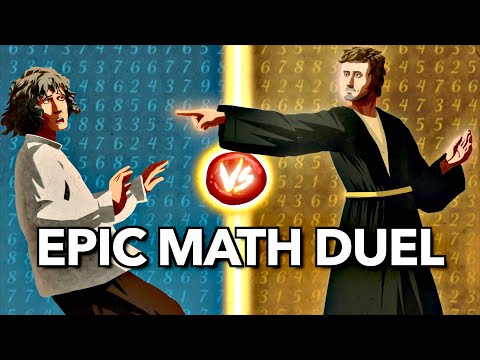
    The Discovery That Transformed Pi
    The Discovery That Transformed Pi

    How Newton Changed the Way We Calculate Pi

    For millennia, mathematicians calculated π using geometry and slow convergence. Then Newton introduced a revolutionary approach using calculus, drastically accelerating the process.

    References:

    • Books and Academic Sources:
      • Arndt, J., & Haenel, C. (2001). Pi-Unleashed. Springer Science & Business Media. Link
      • Dunham, W. (1990). Journey Through Genius: The Great Theorems of Mathematics. Wiley. Link
      • Borwein, J. M. (2014). The Life of π: From Archimedes to ENIAC and Beyond. In From Alexandria, Through Baghdad (pp. 531–561). Springer. Link

    Special Thanks:

    • Alex Kontorovich – Professor of Mathematics at Rutgers University and Distinguished Visiting Professor for the Public Dissemination of Mathematics at the National Museum of Mathematics (MoMath)

    Credits:

    • Written by: Derek Muller & Alex Kontorovich
    • Animation by: Ivy Tello
    • Filming: Derek Muller & Raquel Nuno
    • Edited by: Derek Muller
    • Music: Jonny Hyman & Petr Lebedev
    • Additional Music: Epidemic Sound
      • "Particle Emission"
      • "Into the Forest"
      • "Stavselet"
      • "Face of the Earth"
      • "Firefly in a Fairytale"
    • Thumbnail by: Gianmarco Malandra & Karri Denise
    Extra
    View all
    The Discovery That Transformed Pi
    The Discovery That Transformed Pi
    Preview

    How Newton Changed the Way We Calculate Pi

    For millennia, mathematicians calculated π using geometry and slow convergence. Then Newton introduced a revolutionary approach using calculus, drastically accelerating the process.

    References:

    • Books and Academic Sources:
      • Arndt, J., & Haenel, C. (2001). Pi-Unleashed. Springer Science & Business Media. Link
      • Dunham, W. (1990). Journey Through Genius: The Great Theorems of Mathematics. Wiley. Link
      • Borwein, J. M. (2014). The Life of π: From Archimedes to ENIAC and Beyond. In From Alexandria, Through Baghdad (pp. 531–561). Springer. Link

    Special Thanks:

    • Alex Kontorovich – Professor of Mathematics at Rutgers University and Distinguished Visiting Professor for the Public Dissemination of Mathematics at the National Museum of Mathematics (MoMath)

    Credits:

    • Written by: Derek Muller & Alex Kontorovich
    • Animation by: Ivy Tello
    • Filming: Derek Muller & Raquel Nuno
    • Edited by: Derek Muller
    • Music: Jonny Hyman & Petr Lebedev
    • Additional Music: Epidemic Sound
      • "Particle Emission"
      • "Into the Forest"
      • "Stavselet"
      • "Face of the Earth"
      • "Firefly in a Fairytale"
    • Thumbnail by: Gianmarco Malandra & Karri Denise
    00:19
    0 0
    How Imaginary Numbers Were Invented
    How Imaginary Numbers Were Invented
    Preview

    How Giving Up Reality Solved the Cubic Equation

    For centuries, a general solution to the cubic equation was considered impossible—until mathematicians embraced complex numbers, abandoning the strict requirement that math reflect physical reality.

    References:

    • Videos:
      • 500 Years of Not Teaching the Cubic Formula – YouTube
      • Imaginary Numbers are Real – YouTube
    • Books and Papers:
      • Dunham, W. (1990). Journey Through Genius: The Great Theorems of Mathematics. Link
      • Toscano, F. (2020). The Secret Formula, Princeton University Press. Link
      • Bochner, S. (1963). The Significance of Some Basic Mathematical Conceptions for Physics, Isis, 54(2), 179–205. Link
      • Muroi, K. (2019). Cubic Equations of Babylonian Mathematics, arXiv:1905.08034. Link
      • Branson, W. (2014). Solving the Cubic with Cardano. Link
      • Rothman, T. (2013). Cardano v Tartaglia: The Great Feud Goes Supernatural, arXiv:1308.2181. Link
      • Siadat, M. V., & Tholen, A. (2021). Omar Khayyam: Geometric Algebra and Cubic Equations, Math Horizons, 28(1), 12–15. Link
      • Merino, O. (2006). A Short History of Complex Numbers, University of Rhode Island. Link
    • Historical Works:
      • Cardano, G. (1545). Ars Magna (Dover reprint, 1993). ISBN: 0-486-67811-3
      • Bombelli, R. (1579). L’Algebra. Link
    • Software:
      • Manim Community Developers. (2021). Manim – Mathematical Animation Framework (v0.13.1). Link
    00:23
    0 0
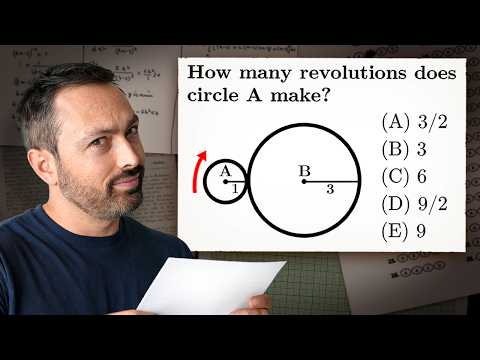
    The SAT Question Everyone Got Wrong
    The SAT Question Everyone Got Wrong
    Preview

    How an SAT Question Became a Mathematical Paradox

    A fascinating breakdown of an SAT question that led to widespread confusion and uncovered a deeper paradox in mathematics.

    References:

    • MindYourDecisions. Summary of this problem: YouTube
    • Kyle Hill. More cool math about this problem: YouTube
    • MinutePhysics. Discussion of a solar day: YouTube
    • Murtagh, J. (2023). The SAT Problem That Everybody Got Wrong, Scientific American: Link
    • United Press International (1982). Error Found in S.A.T. Question, New York Times: Link
    • Yang (2020). Hardest SAT math problem?, Quora: Link
    • Coin rotation paradox, Wikipedia: Link
    • Simmons, B. (2015). Circle revolutions rolling around another circle, Math StackExchange: Link
    • Sidereal time, Wikipedia: Link
    • Solar Time vs. Sidereal Time, Las Cumbres Observatory: Link
    • Zotti, G., et al. (2021). The Simulated Sky: Stellarium for Cultural Astronomy Research: Link
    • Newspapers from 1980s–1990s, Newspapers.com: Link
    • SAT Practice Test, College Board: Link
    • Revolution Definition, NASA: Link
    • Revolution Definition, Merriam-Webster: Link
    • Earth motion animation, NASA: Link
    • Satellite animation, NASA: Link
    00:18
    0 0
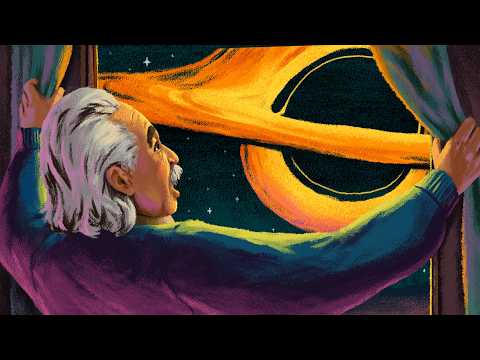
    Mathematics of Black Holes
    Mathematics of Black Holes
    Preview

    Einstein was wrong about black holes — what else?

    This video was inspired by conversations with leading physicists and key scientific literature. Below are the references:

    References

    • Thorne, K. (1995) – Black Holes & Time Warps: Einstein's Outrageous Legacy
    • Hamilton, A. J. S. (2021) – General Relativity, Black Holes, and Cosmology – Link
    • Relativity Playlist by ScienceClic – Link
    • Black Hole Events by PBS Space Time – Watch
    • Newton’s Letters via The Newton Project – Link
    • Einstein, A. (1915) – Die Feldgleichungen der Gravitation – Link
    • Schwarzschild, K. (1916) – Über das Gravitationsfeld eines Massenpunktes – Link
    • Wali, K. C. (1982) – Chandrasekhar vs. Eddington—An Unanticipated Confrontation – Link
    • How to Build a Black Hole – Watch
    • Oppenheimer, J. R., & Volkoff, G. M. (1939) – On Massive Neutron Cores – Link
    • Oppenheimer, J. R., & Snyder, H. (1939) – On Continued Gravitational Contraction – Link
    • Schwarzschild Geometry by Andrew Hamilton – Link
    • Why Time and Space Swap by ScienceClic – Watch
    • Why All World Maps Are Wrong by Vox – Watch
    • Hamilton, A. J., & Lisle, J. P. (2008) – The River Model of Black Holes – Link
    • Mapping The Multiverse by PBS Space Time – Watch
    • Rotating Black Hole via Wikipedia – Link
    • Wormhole Travel by PBS Space Time – Watch
    • Morris, M. S., & Thorne, K. S. (1988) – Wormholes in Spacetime and Their Use for Interstellar Travel – Link

    🖼 Visuals & Simulation References

    • ScienceClic – “What would we see if we fell into a black hole” – Watch
    • Kazmierczak, J. et al. (2021) – NASA’s NICER Tests Matter’s Limits – Link
    • Bridgman, T. et al. (2024) – M5.1 Flare at Active Regions 13559 & 13561 – Link
    • Schnittman, J. et al. (2019) – Black Hole Accretion Disk Visualization – Link
    • Wiessinger, S. et al. (2020) – A Decade of Sun – Link
    • Skelly, C. et al. (2017) – What is a Neutron Star? – Link
    • Earth texture – Link
    • First image of Sgr A* – Link
    • Image of M87 – Link
    • Polarized light image of Sgr A* – Link
    00:37
    0 0

    Designed for each Manara students

    We are a team of passionate people whose goal is to improve everyone's life through creating a collective knowledge pool. 

    EduManara
    Mohamed Ibrahim Kamel St, Hurghada 2, Red Sea Governorate 84513 
    Egypt


    • ahakim28@manaraschool.org
    Follow us
    Click here to setup your social networks
    Copyright © EduManara
    Powered by Odoo - Create a free website